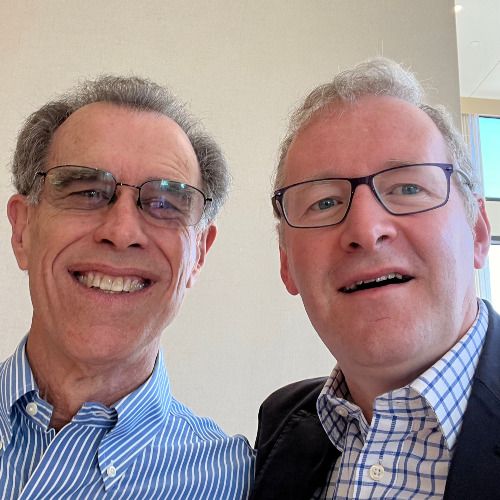
From Introverts to Extroverts: Navigating Communication Styles in Meetings
This podcast episode delves into the critical balance of when to speak up and when to remain silent in conversations, particularly in professional settings. The hosts explore various tactics for effectively contributing to discussions while also emphasizing the importance of active listening. They highlight how personality traits, such as introversion and extroversion, influence communication styles and the dynamics of group interactions. The episode features insightful quotes from historical figures, reinforcing the idea that thoughtful communication is more impactful than simply filling silence with words. Ultimately, listeners are encouraged to cultivate awareness of their own tendencies and to create environments that empower all participants to share their thoughts and ideas effectively.
Takeaways:
- Effective communication requires knowing when to speak and when to remain silent.
- Creating an environment where everyone feels safe to share their ideas is crucial.
- Non-verbal cues, like eye contact and posture, can signal readiness to contribute.
- Introverts and extroverts have different approaches to communication; understanding this is key.
- Listening actively can lead to deeper understanding and better insights from others.
- Setting a clear purpose for meetings can significantly enhance their effectiveness.
Remember you can reach out to Ian and Mike to ask a question or share your thoughts - email them at consultingforhumans@p31-consulting.com
You can follow the show on LinkedIn at https://www.linkedin.com/groups/13116342/
And you can follow us on Instagram at https://www.instagram.com/learn.consulting
The Consulting For Humans podcast is brought to you by P31 Consulting LLC
Transcript
Welcome back, luminaries.
Speaker A:We are glad you joined us.
Speaker A:Congratulations on making such a wise choice to join the Luminaries tier of the Consoling for Humans podcast.
Speaker A:Mike, here we are.
Speaker A:Give us a clue about what we're going to be talking about today.
Speaker B:Well, today we're going to continue with our topic from the main episode, of course, when to speak up and when to be silent.
Speaker B:So today we are going to share some more tactics for successfully speaking up at the right moment.
Speaker A:We are going to move on from thinking about when to speak to dig into the other fascinating choice, when to to stay silent.
Speaker B:We'll take a look into the influence of psychology and personality, the relationship between introversion, extroversion, and their influence on what we say and how we say it.
Speaker A:And we're going to look at the reverse of the when to speak problem.
Speaker A:We're going to look at the problem that I think is there for project leads and seniors.
Speaker A:How do you design a meeting so that people do speak up, whatever their psychology and whatever their situation?
Speaker B:So as we start off, Ian, we've been reading about this, we've been talking about this for a couple weeks here, and we've kind of stumbled across some great quotes.
Speaker B:You know what was one of your favorites to get us started?
Speaker A:Well, Mike, I wanted to reach far back into ancient wisdom.
Speaker A:Plato.
Speaker A:Yeah, him.
Speaker A:He said that wise men.
Speaker A:And I'm sure he also meant wise women.
Speaker A:Wise women talk because they have something to say, fools because they have to say something.
Speaker A:So a great line from Plato there reminding us to speak with purpose and substance.
Speaker A:But that sounds like some other quotes that you and I both know, right?
Speaker B:Well, we both said, you remember that.
Speaker B:What about it's better remain silent and be thoughtful than to speak and remove all doubt.
Speaker B:And I went to search that and say, I think that was Lincoln.
Speaker B:No, it came up sometimes as Mark Twain.
Speaker B:Turns out it's a variation of Proverbs in the Bible.
Speaker B:Yeah.
Speaker B:The NIV version would say, even fools are thought wise if they keep silent and discerning if they hold their tongues.
Speaker B:So as always in the Western world, the Bible, Shakespeare, the Greeks, or all three.
Speaker A:Right.
Speaker A:I love the fact that people have studied American literature, think that most cool or aposite things were said by Mark Twain, even if he'd never said them.
Speaker A:The Brits have the same thing with Winston Churchill.
Speaker A:We think that every wise word was written by him, but not.
Speaker A:So speaking of leaders, Mike, I remember us talking in the main episode about Nelson Mandela and about his habits of listening to other people first so the quote that he gave in a writing or a speech, I can't remember where was speak last lead best.
Speaker A:Any other world leaders that we can learn from there, Mike?
Speaker B:End up guilty of jumping back into my home base here.
Speaker B:I'm thinking about Franklin Roosevelt, who always gave me the best of advice.
Speaker B:Be sincere, be brief, be seated.
Speaker A:And there are all kinds of images going on in my head when his advice includes being seated.
Speaker A:And I think that's a good idea.
Speaker A:Mind you, fdr, bless him, he didn't have much choice in his later life, but he was trying to get other people on side with him.
Speaker A:There's another piece of advice widely attributed to someone's mom.
Speaker A:And if you've heard this from your mother, then remember that she is your mom and she's brilliant.
Speaker A:The words of advice go like this.
Speaker A:Sugarcoat your words.
Speaker A:You never know when you'll have to eat them, which is pretty good for thinking and preparing and being thoughtful, as we said in the main episode.
Speaker B:Great quotes.
Speaker B:I love them.
Speaker B:They're perfect for, of course, any consultant's coffee mug.
Speaker B:So let's dig into some more of the specifics, some of the tactics for getting it right.
Speaker A:Let's.
Speaker A:So here we go, Mike.
Speaker A:In the main episode, we came up with two main pieces of advice.
Speaker A:First, for doing a good job speaking up in a meeting or a call, the first thing that we said was get to the point quickly.
Speaker A:And that means having thought through what you want to say.
Speaker A:And also when you're done speaking, make it clear that that moment has come and that you're passing it over to someone else.
Speaker A:Now, besides those two great pieces of advice, having thought harder about all of the pitfalls and all of the bits of psychology going on around speaking up, there are some more specific tactics that might be useful for our luminaries here.
Speaker A:I'm going to go first of all with the non verbal channel.
Speaker A:I think that in meetings and calls, giving silent signals that say that I have something to say.
Speaker A:Giving non verbal signals is a really, really great tactic in person.
Speaker A:That can mean, you know, upright posture and eye contact.
Speaker A:In a virtual setting that can mean camera on, if it wasn't already on, smile, maybe even hand raised.
Speaker A:But give people signals that says you're ready to jump in and who knows, they might spot you.
Speaker B:I think that's a great idea.
Speaker B:And I also love naming your behavior, you know, before you're speaking.
Speaker B:Yeah, I've got a question or I'm going to share something that I just noticed, for example.
Speaker A:Yeah, I like that as well.
Speaker A:Because it forces us to slow down the pace that that behavior naming thing.
Speaker A:I also like sharing observations.
Speaker A:So for example, I might say, oh, I just heard Michel say X or Y or Z.
Speaker A:And that has an important consequence.
Speaker A:And I might anchor what I'm going to say in an observation, which I think is better than sharing my thought process.
Speaker A:You know that moment when someone says, ah, this reminds me of one time we were using a similar approach to this, but it was a bit less iterative and blah blah, blah.
Speaker A:And I was wondering if there could be some parallels with the bloody, bloody blah.
Speaker A:And sharing your consciousness like that is not a great way, I think, of getting people to hear and benefit from what you have to say.
Speaker B:I can personally attest that that's not a great way because I did it for a long time here.
Speaker B:In thinking back to Roosevelt of be brief and be seated, it's helpful sometimes to be ready with a question that turns the attention back to someone else again, signaling that I'm done or let's keep everybody involved in this.
Speaker B:So I wonder what Sophie thinks, for example.
Speaker A:Very good.
Speaker A:And I think that also implies that we know who's in the room with us.
Speaker A:It's really easy to underestimate this one.
Speaker A:I think knowing the room, knowing the other participants in the call or the meeting well enough that you've anticipated what some of their responses might be.
Speaker A:So rather than making it all about you, the speaker, make it about how you place your words as a speaker in context for the other humans who are in the conversation with you.
Speaker B:Yeah, I know for me, I always was itching to speak.
Speaker B:I would get an idea and then I'd be a little bit obsessed with that thinking, okay, when's the right time to think and I'm missing what's going on.
Speaker B:So for me, having a backup plan in case my moment doesn't come, there's a moment for that thing and dragging it out after that moment's past was awful.
Speaker B:Just thinking ahead and I can always one write it down, I won't lose it.
Speaker B:And plan to perhaps send a chat, WhatsApp, an email, offer to follow up something where I go, you know what, that's fine, I've got it.
Speaker B:I know what I'm going to do with it.
Speaker B:I can let it go and still be right in the middle of this conversation.
Speaker A:Yeah, great.
Speaker A:Carefully used.
Speaker A:I think back channels are great for helping us manage our attention and our stress when we're in a big multi person conversation like that.
Speaker B:That.
Speaker A:Now, Mike, in the main episode we talked about what are the moments when it might be a right time to speak, when you need to deliver some bad news or some controversial news, or when you've got something particularly insightful to share, or when you need to clarify something?
Speaker A:I think it's interesting as well to think, what are the problems?
Speaker A:What are the thoughts going on in our heads that cause us to go wrong, either to over speak and to jump in and over share or.
Speaker A:Or to hold back and miss our moment?
Speaker A:And I love thinking about this.
Speaker A:What's in the consultant's mindset that sometimes stops us from being successful here?
Speaker B:Yeah, I think there's a misguided thought in our heads often that people who are the valuable ones are the ones who have the information.
Speaker B:And we undervalue a question, even a naive question sometimes, most of all a naive question.
Speaker B:And maybe we also undervalue the thoughts and discussion coming from the mouths of others.
Speaker A:So we've got a bit of bias, a bias towards what's in our heads and against what's in other people's heads.
Speaker A:I think we have all kinds of other bias as well.
Speaker A:We could go into a lot, I think, about culture and about psychology.
Speaker A:We're going to talk about introversion and extroversion later on in the episode today.
Speaker A:But I think understanding what it is about your culture and your expectations that might be holding you back and how that might be different from the other folks in the conversation is a really important thing to.
Speaker A:To get our heads around.
Speaker B:Yeah.
Speaker B:And I think emotions have so much to do with this.
Speaker B:Oftentimes some sense of personal injustice.
Speaker B:You haven't been listening to me.
Speaker B:And now I'm going to get the attention that you do me and.
Speaker B:And as soon as I make that point, I might follow it with.
Speaker B:And another thing.
Speaker B:So having our emotional intelligence levels high and being aware of that really a good thing?
Speaker A:Yeah.
Speaker A:I think people often think emotional intelligence is about controlling your anger or your frustration.
Speaker A:It's also about controlling your excitement and your enthusiasm just a little as well.
Speaker A:And I can think of some reasons why people get suckered into oversharing or jumping in on a feeding frenzy of, you know, comment upon comment upon comment.
Speaker A:One thing that I noticed is the way people behave socially, the way that they behave with respect to others.
Speaker A:And we have folks talking and telling war stories about only tangentially related previous consulting experiences.
Speaker A:Mike, you've talked about this before.
Speaker A:It's very easy to start the old paraffin lantern swinging and telling stories of days gone by.
Speaker B:Right.
Speaker B:Oh, gosh, it's like a game of telephone.
Speaker B:You know, we all have to pick up and give our own version of it and sometimes, especially amongst competitive consultants, a game of one upmanship.
Speaker B:Oh, well, that was your.
Speaker B:Now here's my story.
Speaker B:Here's my story.
Speaker B:Luckily, back when we were really awful about this because we had a lot of new people together and we were all a little bit showing who's alpha a bit.
Speaker B:We, we had a consultant new to the team, Carol, who would tactfully bring us back to the question at hand, the decision we needed to make, or the topic that we were on.
Speaker B:But I was amazed as I thought back to that, that Carol never succumbed to a little bit of what we're also talking about too, that she was the first woman in our executive team.
Speaker B:And much of the oversharing, as I think back on it now of that, besides this kind of testosterone driven one upmanship was a lot of mansplaining.
Speaker B:And I think it would have been very easy for her to have been pretty frustrated by all the unneeded stories and explanations.
Speaker B:And I could very easily see that a lot of times there are people who feel that they're being ignored or left out of a conversation or not fully known.
Speaker B:So that initial boys club atmosphere, for example, might have led someone else to overshare, to prove themselves, just to get a word in edgewise or to express some frustration with our behavior.
Speaker A:And I think, again, with a bit of bias in mind, we're all pretty sure that what we have to say is absolutely driven by facts and analysis.
Speaker A:And what everybody else wants to say is kind of made fuzzy by emotion.
Speaker A:But I think actually emotional intelligence about what you're saying and why you're saying it is a really great skill.
Speaker A:And finally, Mike, there's a meta thought process here that I want to talk about, and that is purpose or the lack of it.
Speaker A:It's really easy for people to forget or to miss out that moment when we express the purpose of the meeting or the call, like our objective today is to do X.
Speaker A:It sounds very simple, but looking back on meetings that I've been in, where the contributions have been jumbled or excessive or awkward, anytime that's happened, I notice as well that somebody has failed to say at the top of the meeting, here's our purpose for today.
Speaker A:It's a really easy thing to fix with a bit of discipline and a bit of leadership.
Speaker A:It's a really easy thing as well to miss out if we're impatient or a little bit lazy.
Speaker B:Intellectually, I think that's an outstanding piece of Advice.
Speaker B:I mean, if we could just do that and stick with that, it would rectify a multitude of wrongs.
Speaker B:Well, we've picked up on a lot of good ideas about why and how to speak up when the moment's right.
Speaker B:Maybe now it's a good time to talk about the other side of this issue.
Speaker A:So, Mike, the other side is going to be the challenge of remaining silent.
Speaker A:When should we, in fact, choose not to speak up, but to hold back and let the conversation flow or let somebody else's ideas take center stage?
Speaker A:There are some really good reasons why you might want to do this first.
Speaker A:For example, if your objective is all about discovery, if you're there to listen and uncover what somebody else has got in their brains or the facts that they have at their fingertips, then being able to listen actively means, I think, also being able to choose to suspend the moment when you speak and suspend the moment when you share your idea.
Speaker A:If somebody else, especially a client, pauses while they're explaining something, we need to resist the urge to jump in, to interject, as Susan Scott wrote in a really excellent book, Fierce Conversations.
Speaker A:If you've never heard of Susan Scott, if you've never heard of Fierce Conversations, check it out.
Speaker A:It's a really great resource.
Speaker A:Susan says, let the silence do the heavy lifting.
Speaker A:And I've got a lot more to say on silence, Mike.
Speaker A:We'll get back into it in another part of the show.
Speaker A:But I think if you know that you want to discover something, the best place for it to come out of is somebody else's mouth and not my mouth.
Speaker B:There are times as well, Ian, when the other person needs thinking time, and we're going to talk about this with different personality styles and psychology and everything.
Speaker B:But when participants are thinking aloud or working through a task that we're trying to learn about and engage on, it's a great time for consultants to remain silent and let them struggle to pull their thoughts together, even allowing them, even though we don't want to do this, to verbalize their thought process without interruption, as opposed to jumping ahead and trying to finish their sentence or provide an alternative.
Speaker B:Because without that interruption, there's a lot of crucial information as well as something to be learned about their perspective.
Speaker A:Yeah, it's really good, the power of letting somebody else do their thinking.
Speaker A:I think the most difficult kind of thinking that people sometimes have to give is personal feedback.
Speaker A:If somebody's trying to compose what they have to say about the way a particular experience went or how somebody's behavior impacted on the work, anytime, therefore, that you're receiving feedback from team members and even from clients.
Speaker A:We should be careful to listen.
Speaker A:And that means being quiet and being active in our approach.
Speaker A:It's really easy one, you start to hear feedback, to want to jump in and to want to defend and to make a response.
Speaker A:It's an important moment in the life of a conversation when you notice that somebody else is saying something that you need to hear and that they're finding challenging to put together.
Speaker A:And that's a really important moment for us to stay out of the conversation and let them continue with their thinking and for us to really listen.
Speaker B:And it's one of those examples, Ian.
Speaker B:Feedback is a great one when we're resisting defensive reactions.
Speaker A:Yeah.
Speaker B:So many times feedback's one of them.
Speaker B:Them perhaps a client is expressing dissatisfaction with the deliverable.
Speaker B:Anytime you feel this urge to justify your actions or defend your work or behavior should be a quick clue to say, get quiet.
Speaker B:Let's make sure we understand what's being said here before responding.
Speaker B:You know, if anything, our first response might be some more questions to be sure we understand.
Speaker A:It's funny, Mike.
Speaker A:There's a real important contradiction here in the mind of consultants even beginning to think for more than a few minutes about, when do you speak?
Speaker A:We naturally come into, okay, when do you remain silent?
Speaker A:And we keep coming back to this bias that we sometimes have of being a little bit bent out of shape about staying silent and about listening to another person's perspective.
Speaker A:It's an important thing for us to think about.
Speaker A:It also has some consequences for how our personality plays out.
Speaker A:So let's just talk about personality for a moment, Mike.
Speaker A:For many years now, you and I have been thinking about and talking about and teaching about the role that personality plays in how people interact with each other, especially in the context of consulting projects.
Speaker A:I want to talk a little bit about introversion and extroversion.
Speaker A:When was the first time that you first came across the idea of introversion and extroversion?
Speaker B:Had to be one of my first introductions to Myers Briggs.
Speaker B:I was an absolute off the scale extrovert, and I wanted to dig into what exactly that meant and to find out what's the other end of that scale and why is that and what are the ramifications.
Speaker A:It's great, isn't it?
Speaker A:And it becomes part of the vocabulary that explains a lot of what's happening in and between consultants and their clients on consulting projects.
Speaker A:Isabel Myers and Catherine Briggs came up with this formulation for personality traits.
Speaker A:One of the pairs is introversion and extroversion.
Speaker A:And I think of all of the different dimensions of Myers Briggs, introversion and extroversion is one of the ones that really holds up, like it correlates and explains really well some of the things that are happening in real life.
Speaker A:More recently as well, there was a really great book by an author called Susan Cain, really a manifesto for reevaluating introverts, and which I read and loved because I'm a pretty strong introvert as well.
Speaker A:It's called Quiet Something like unleashing the silent power of introverts and understanding what's going on in the brain of an introvert and what it costs them in terms of energy.
Speaker A:And also when their best thinking and their best processing are done, understanding that, I think is a really big step forward.
Speaker A:Without going too deeply into introversion and extroversion, I would just say this.
Speaker A:I think that if you broadly say introverts are people who have to expend energy in order to find their way into a conversation and who do their best thinking separately from having their mouth open, and extroverts being people who find it energizing to be in a conversation at all and will activate their brain and their thinking by speaking and social engagement.
Speaker A:If that's the difference, then maybe there's another bit of bias here.
Speaker A:And I certainly think that Myers and Briggs thought this.
Speaker A:In what you might call the Anglo Western, you might even say Anglo Western male world of the second half of the 20th century, there was a bit of a bias in favour of extroversion.
Speaker A:And you might even say that the American schoolroom habit of doing show and tell is a sort of way of fostering extroversion, and that people who had an introverted preference were sort of expected to make up for that by adding and adapting extroverted behaviors on top.
Speaker A:I think that is something that Susan Cain was trying to argue against.
Speaker A:And I think that what we're talking about here with this decision about when to speak up is partly driven by people's own anxiety about their personality.
Speaker A:I think we can do a better job still of making sure that our introvert colleagues, and especially our introverted clients, have some moments when they can speak.
Speaker B:Well, there's absolutely some great research that suggests that introverts make some of the best consultants and the best salespeople.
Speaker B:And it's completely against the old Western type and myth and stereotype and what you think of.
Speaker B:As a matter of fact, if you ask anybody to lampoon that extroverted salesperson, that's the one we hate.
Speaker B:Yet we still have all these Commercials and marketing, things that are all about that loud extraversion, as opposed to looking at the research that suggests really delivering the value, making those sales are things that are better done by introverts.
Speaker B:I also will say, personally, once some of this understanding came to mind for me, in running projects, running teams, working with people, I often found that the best thinking was thinking that I typically had not gotten out of some of the best people in the way we had our interactions, in the way we ran meetings and started to work consciously with people to figure out how to do that, as you said, you know, there are some folks that I absolutely admire deeply and realize that if I want to get their best answer, I should probably ask them that question a day ahead or make sure there's some quiet time for them to process.
Speaker B:It's a great thing to talk about is how do we have a meeting where people can get hurt?
Speaker A:Absolutely, Mike.
Speaker A:Let's get into that.
Speaker A:So, Mike, what you were just saying raises the possibility that instead of asking people to adapt away from their own personality, instead of asking introverts to get extroverted or even asking enlightened extroverts to take a step back and think, instead of asking the people to adapt, maybe we could ask the leaders to adapt the way that we run these meetings and conversations.
Speaker A:It's easy to assume, I think, that getting attention and making a point are somehow privileges that have to be earned and that they're a badge of intellectual superiority.
Speaker A:If I'm speaking, I must be the smart one.
Speaker A:Now, if you're senior and you have high status in the group and the attention is yours already and it's yours to give away, then it's easy to have the attitude in your head that says, well, all these folks here, they better prove that they've got something good to say when I let them speak, that getting airtime is an intellectual challenge and a status challenge.
Speaker A:And that bias, I think, is a problem for some kinds of conversations.
Speaker A:How about flipping the roles?
Speaker A:If you're having a meeting, if, as you said earlier, Mike, if you're the number one, if you're the leader, if you're organizing the process of this meeting, then how about this?
Speaker A:If everyone in the audience has something to add, add.
Speaker A:And the consequence of that is that if they don't say it, if they don't bring it, then there's no point in having the meeting.
Speaker A:Apart from massaging your ego when you think of it that way, then getting the thoughts and responses of the people in the audience is actually a privilege that the speaker has to earn.
Speaker A:So rather than people finding a way in being the challenge, actually to be the one speaking, I need to get from the audience the privileged content that they have in their heads.
Speaker A:And all of the problems that we've talked about, the challenges of introverted personality, of status, of disagreement, of language, all of those anxieties and biases aren't any longer the problems of the audience members needing to choose their moment.
Speaker A:They're the problem of the presenter or the leader who needs to find a way to get people in despite those things.
Speaker A:I don't know.
Speaker A:What do you think?
Speaker B:Well, I'm thinking back to listening to Trevor Noah talking about Nelson Mandela's that Leader Speaks Last here.
Speaker B:And if you start with that assumption that everyone potentially has something to say, and it's my job to help them say it, whatever the obstacles, I think we could totally change the way we run meetings and elicit contributions from team members.
Speaker B:Most meetings in the consulting world are probably run with the implicit objective and maybe explicit objective of maximizing persuasion, getting across an argument usually supported by a presentation, and getting as many of the author's ideas as possible into the audience's brain.
Speaker B:And with that mindset, you know, anything the audience has to say is secondary to the persuasion agenda and therefore almost has to fight its way in.
Speaker B:I mean, how often do we have a parking lot?
Speaker B:You know, all these ways that we thought ahead of time that anybody that starts to go off the point, I'm trying to drive them to.
Speaker B:I have great ways to get rid of that, to.
Speaker B:Let's get past that.
Speaker B:We'll come back to that.
Speaker B:Let me park that.
Speaker B:Yeah.
Speaker B:So that, though we've said the other day, I think on one of the episodes that sometimes it's a great day in the life of a consultant when a presentation turns into a conversation, which was getting underneath this idea that actually there are greater outcomes to be had than just slogging our way through and winning this persuasion fight.
Speaker B:Yeah.
Speaker A:And if you reverse the persuasion mindset, it becomes something very different.
Speaker A:My alternative might be a building mindset rather than a persuasion mindset.
Speaker A:If everything that happens to get presented on PowerPoint slides is secondary to the idea of unearthing what's in the minds of the audience in that situation?
Speaker A:Here's my rhetorical question to all of the listeners.
Speaker A:How would you build an agenda that maximized the participation and the thinking of the audience?
Speaker A:Then what role would things like PowerPoint presentations play, and when would you use them?
Speaker A:And if you start with the primacy of the Audience, rather than the primacy of the presenter, you come to some very different decisions, I think, about how you use media and how you use a speaker and how you use data and when you use them.
Speaker A:If I'm the presenter, then back in the persuasion mindset, anything that I don't know is.
Speaker A:Is naturally irrelevant.
Speaker A:And by the way, if there is something relevant that I don't know, then I have failed.
Speaker A:If you flip that round, then the mindset says, as the presenter, I start out believing that there are still important things that I don't yet know.
Speaker A:And all of the other people's perspectives on the problem are going to be additive to what I have to say, not diluting what I have to say.
Speaker A:And therefore, the way that meetings are organized carries with it a lot of assumptions about role and bias and changing that could have a big impact on the quality of people's contributions and the amount of contributions that they bring.
Speaker B:As I'm sitting here thinking about this right now too, I'm thinking, boy, wouldn't that change so many things about meetings?
Speaker B:For example, who do we want to have in the meeting, right?
Speaker B:Do we want to have the purpose of this meeting really explicitly stated?
Speaker B:So much of the stuff that we talked about earlier takes on a really different and very intentional role.
Speaker B:What about the meetings before the meetings, or the things that we can do to maximize everybody's time and contribution?
Speaker B:I think you're right that the clients, the consultants, all of us who might have this expectation or the cultural condition that these are persuasion events and that we're supposed to go into this meeting playing a teacher or a judge role, that's okay.
Speaker B:But it would be fascinating to go back, to ask ourselves, to ask our colleagues, to especially ask our clients, how much have our consulting presentations actually contributed towards solving the problem or realizing an opportunity?
Speaker A:I think that lots of clients and consultants expect a presentation, and that's both an opportunity and a curse.
Speaker A:Clients are going to sit there with their arms folded, going, okay, tell me the smart stuff that you're bringing here.
Speaker A:And it's fair enough.
Speaker A:There are good reasons why that might be the case, especially if you're doing very analytical work.
Speaker A:But it's a really easy habit for us to fall into.
Speaker A:And if you're leading and organizing meetings, there's a really great opportunity here to question yourself, to be a little bit skeptical.
Speaker A:If you're organizing or leading a meeting, how much might you be missing if you don't, for example, clarify expectations with the participants, especially the clients, about what they're expecting, like Is the purpose really persuasion or is it learning and building as well?
Speaker A:How many times, we could ask ourselves, how many times have you set out to run a meeting in persuasion mode with top down on PowerPoint slides and then been caught out by somebody who's got new or different expectations?
Speaker A:Mike, I want to go back to something that we talked about in the main episode.
Speaker A:Simon Sinek's description of Nelson Mandela's learning from his father.
Speaker A:He talked about not only how his father, as a leader in his community, would speak last and would listen to other people first.
Speaker A:We also talked about how they would structure the meeting so that tables were always round.
Speaker A:And this is in myth and legend.
Speaker A:This is the idea of King Arthur and his knights as well.
Speaker A:When there's a real equality based conversation happening, the table is round rather than square.
Speaker A:And forgive me for using a visual metaphor to talk about a thing that normally happens in sound.
Speaker A:But think about it for a second.
Speaker A:How you set up the meeting can have a big impact on whether people's mental model of how we're talking together is a square table or a roundtable.
Speaker A:Like, if it's a roundtable, then everybody's going to take a turn.
Speaker A:There isn't very much structure or hierarchy.
Speaker A:There's not even very much input from the leader about who says what when.
Speaker A:If you have a square table, then something about the setup of the room, something about the setup of the group implies structure and hierarchy.
Speaker A:Like there's a side or a corner of the table that is the top.
Speaker A:And square tables, Mike, are okay at weddings when there's obviously a couple that everybody needs to pay attention to and there are going to be speeches.
Speaker A:But square tables are not really great for having a conversation.
Speaker B:And you're suggesting here, just to make sure.
Speaker B:I got it, that we can have virtual meetings that are either square table or roundtable conversations by exactly what you're saying, how we're setting that up and how we're conducting it.
Speaker B:I love that thought.
Speaker A:So if you're listening in or taking part in somebody else's call, what are they doing at the beginning that sets it up as a square table?
Speaker A:What could they do that would set it up as a virtual roundtable?
Speaker A:Interesting thing to have a go at.
Speaker B:Nice.
Speaker A:So, Mike, we've traveled quite deeply into the fields of how we run meetings so that they're successful, how we get thoughts out of people's heads so that they can make their contributions in a timely way and in an effective way.
Speaker A:We've gone quite far into abstraction, I think.
Speaker A:So before we get too much further.
Speaker A:Let's just pull it back and see if we can get some closing thoughts.
Speaker A:Thoughts here.
Speaker B:Ian.
Speaker B:I'm reminded of our perfect consultant, our first several episodes where we said, ah, they need to be this and this.
Speaker B:And I'm thinking this also seems to be a topic packed with contradictions, which is one of the reasons it's so interesting.
Speaker B:On the one hand, we're very ambitious and keen to please and we equate value with words and content.
Speaker B:So there's this natural temptation for consultants to want to grab the limelight and even feel stressed out about getting enough opportunities to speak.
Speaker A:Yeah, and I think that's one of the reasons that the question comes up a lot when we are coaching and teaching groups.
Speaker A:Right.
Speaker A:How do I get the time to speak up?
Speaker A:It's important to them because they feel like they need to do it.
Speaker A:On the other hand, besides the fact, as we've talked about in today's episode, besides the fact that at least half of us have non extrovert personalities, we also have insecurities, leading in the extreme case to imposter syndrome.
Speaker A:We have these insecurities about who we are and what our role is.
Speaker A:All of these anxieties and insecurities lurking at the backs of our minds.
Speaker A:We are naturally, I think as consultants plagued with these kind of doubts and anxieties and they relate to how it's going to feel when we speak out.
Speaker A:And maybe understanding the doubts and anxieties in our own heads and in the heads of the rest of the team is going to help us to be successful in having conversations and in listening and in sharing ideas.
Speaker B:And just maybe a little bit of patience and a bit of empathy for our colleagues and clients is going to help us too.
Speaker B:We are, after all, humans consulting for and with humans.
Speaker A:Absolutely.
Speaker A:And Mike, since we've been quite philosophical in the Luminaries episode today, I want to share something that we've, we just pulled off the the ChatGPT engine here.
Speaker A:Do you think it's okay for me to say that we got this from ChatGPT?
Speaker B:I think I do.
Speaker B:I think so.
Speaker A:Okay, so Mike, since we have been quite philosophical today, let's share something fun with the listeners.
Speaker A:We thought, who is more philosophical than an Irish poet sitting in a pub?
Speaker A:So we asked ChatGPT to give us a summary of some of these thoughts about listening and speaking in the style of a poet or a bard leading a little session at an Irish pub here, maybe the kind of pub that you might to go to before your critical meeting with your big client.
Speaker A:May you have the wisdom to speak with clarity and the patience to listen with the heart.
Speaker B:May your words be as gentle as the Irish breeze and your silence as strong as the oak trees bark.
Speaker A:May you know the perfect moment to share your wisdom and the grace to stay quiet when it's best to wait.
Speaker B:May your advice always guide with kindness, and may your silence speak volumes of understanding.
Speaker A:Ah, Mike, that's excellent.
Speaker A:Who needs Plato and the Greeks and the Bible and Shakespeare when you've got chatgpt doing fake Irish poetry?
Speaker A:It's excellent.
Speaker B:I'm amazed.
Speaker B:Ian we're just into the New Year.
Speaker B:I was watching yet one more Christmas movie on Epiphany yesterday, and it was filled with luminaries and a conversation around luminaries.
Speaker B:And I thought, oh my gosh, we made it all the way through the Christmas season without referring to luminaries.
Speaker B:We appreciate you Luminaries and are so glad to be with you today, and.
Speaker A:We'Re looking forward to sharing more time with you the next time we get together with the luminaries on the Consulting for Humans podcast.